
getting started with ai in nov 2026
November 22, 2026
a friend of mine asked me for some resources today on how to get up and running with ai.
when i started compiling some sources, i realized just how much there really is to share, and thought it would be good to write out my thoughts on the topic.
first, id divide working well with ai into a few different categories:
- model internals
- you need to stay up to date with the medium of ai. how do llms work? how do harnesses work? how are they changing?
- prompting
- you need to learn subjects well enough to use the right terms/vocab to produce good outcomes with work models do.
- mindset
- you need to have a good mindset. practice good metacognition. always be asking yourself, what can i automate, how can we do this better?
model internals
llms
having a high level understanding of how llms work is important to working with them well.
todays ai models are essentially prediction machines. they are autoregressive - meaning they take a users request, and predict the word that comes next. then, they feed that word, plus the users request back in, and predict the next word. and so on, until the response ends.
there's plenty of debates on whether or not this is "true cognition". but ill save that for twitter.
for more detailed info on how they work, id recommend andrej karpathy's videos:
when llm's first came out, they lacked a lot of capabilities:
- they mostly didn't think before they spoke
- they lacked access to a computer/filesystem
- they weren't able to perform tasks for a long time
- they didn't have long term memory and weren't personalized
as of nov 2026 a lot of this is solved:
- they now spend tokens reasoning about the users request before responding.
- they have access to a computer, and tools like claude code, codex give them access to the filesystem + tools.
- they can perform longer running tasks on your machine(or in the cloud)
- they have better memory, and can be customized according to your preferences.
but...they still are lacking - a lot of which has to do with memory and personalization.
harnesses
a harness is a container for an llm to do work on your computer:
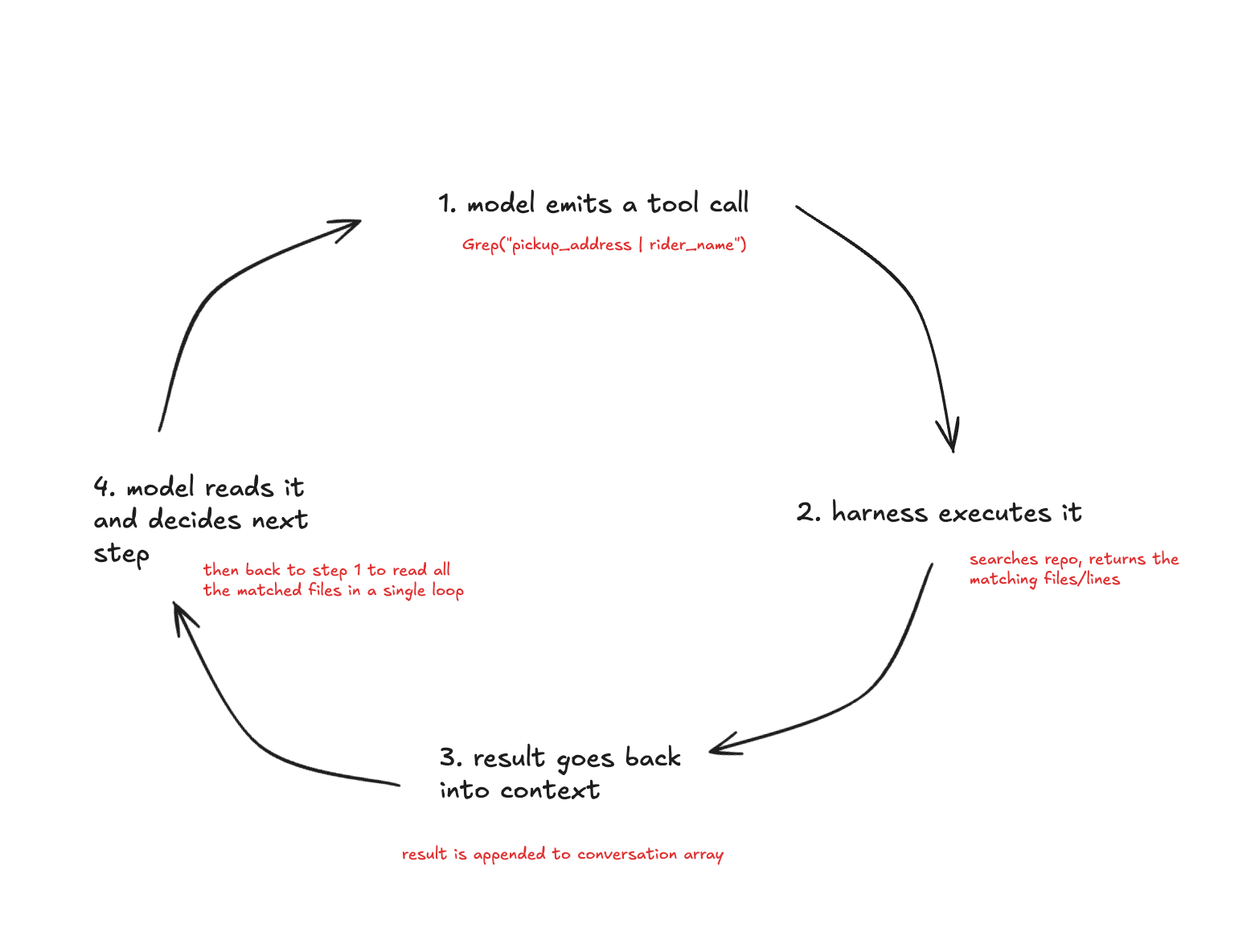
it creates this loop, where an agent reasons about a users request, decides on a tool call, gets the result, then reads it and decides what next.
models see all of their options for tools on each request, which typically includes bash commands, computer use, browsing the web, and much more!
you can basically think about it like a workstation for llms.
i'd recommend reading this guide to better understand harnesses.
note on the future
models are always improving and training methods are changing overtime. staying up to date on whats possible is important.
remember that we are here:
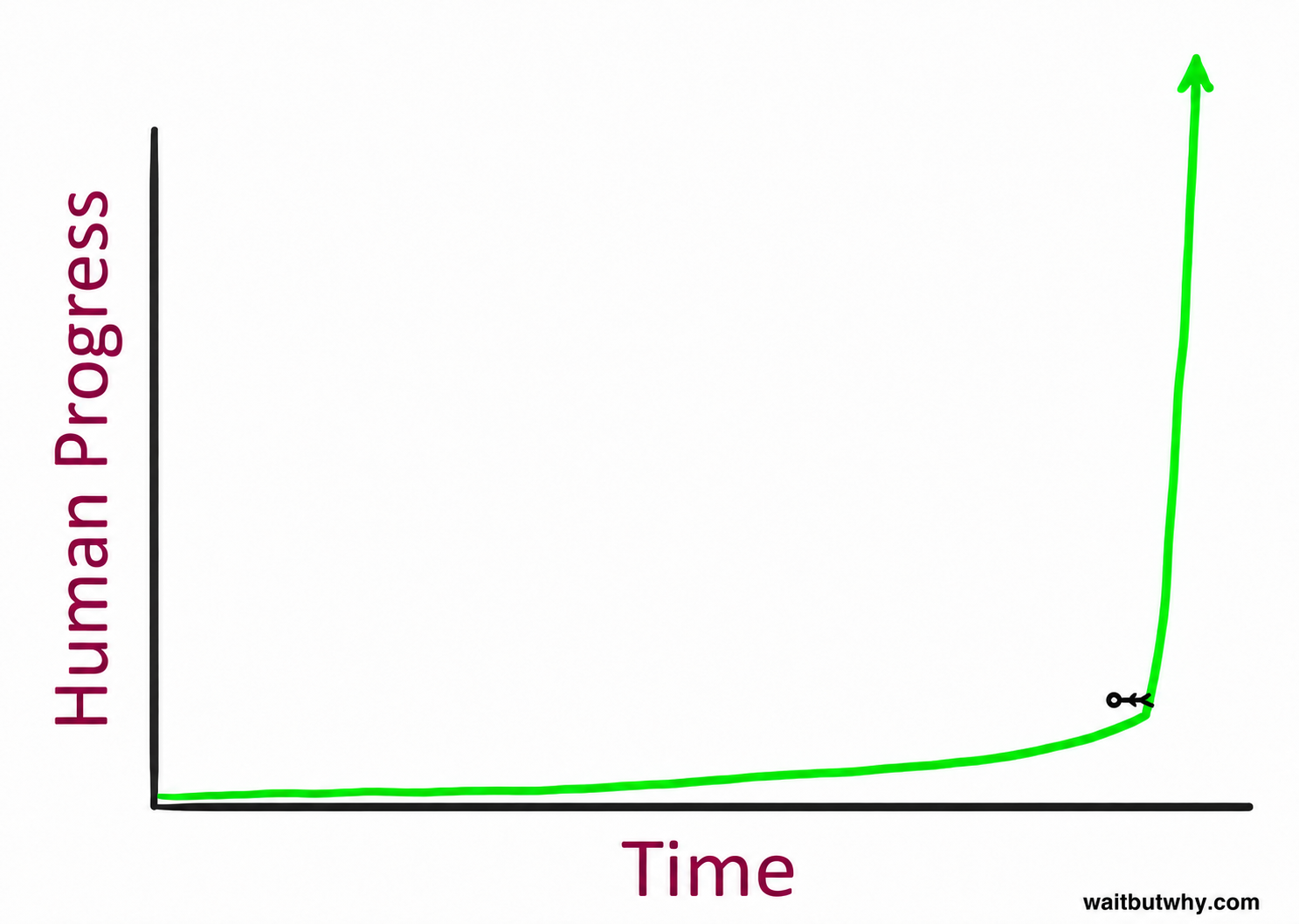
h/t tim urban. this is a great blogpost
overtime as models improve, old tips and tricks don't work as well anymore. this is called the bitter lesson.
prompting
- self doubt
- latent space + learning terms.
- tribunal reviews
the words you use when speaking with llms matter. its important to know a subject well enough to be able to use the proper terms. this puts the llms in the right latent space to execute well. see andrew's tweet for some great examples:


llms thrive on rich context. give info on what you are doing, why, and what your goals are. its common for people to do a braindump describing what they want to build, initial thoughts on a user experience, things they are worried about, how they want the code to be, etc.
the self doubt problem
if you use negative language with claude, he may become convinced its not possible for him to do something, or theres something wrong.
knowing how these models work helps us understand this. if something like "this is really hard" or "it might be confusing" gets put into claude's context window, that means on every turn, he re-reads these messages. its similar to if a human had self doubt about the work they were doing, and then kept repeating the thought as they did the task. of course they would perform worse!
bitter lesson
one important principle to bring up is the bitter lesson: model improvements eat scaffolding/structure. complicated workflows, long prompts discouraging certain behavior often can be removed with new and imrpoved models.
a good practice is to remove all your scaffolding when a new model comes out, see how it performs, and add back things you need.
for now, prompting is important. but, who knows what the future holds. the bitter lesson would suggest it gets less important overtime.
there is no secret sauce
the last thing i want to mention is that there is no secret sauce. some people have this mindset where they think someone has figure out the perfect way of working with llms, and they can just copy their workflow/prompts.
everyone works differently, has unique preferences, and has different preferences for what level of abstraction they operate at.
figure out what works for you, and go from there. maintain a beginners mind.
mindset
first lets talk about emotional regulation. laugh all you want, but you need to have a good mindset when working with llms(and doing any work at all). you should feel calm, and relaxed. if you are stressed, impatient, angry, its not good for anyone. it almost feels like llms can sense the stress in your frantic typing, and use of language. i try and practice a version of the alexander technique to stay calm.
the most important thing to keep in mind by far is metacognition. thinking about how to improve the process in which you are working with claude. both at the task level, and at the collaboration one.
at the collaboration level, this means thinking about what level of abstraction you should be operating at for a given task, adding adversarial reviews, or providing more context on your work.
an example for me is i sometimes would have claude run adversarial reviews on the work i did, particularly if we were solving a thornier bug. but a problem i ran into was that many of the reviews were unfounded, and had us running in circles. so i created a tribunal skill, where one agent conducts an adversarial review, another one trys to devalidate the issues it found, and a third judge determines which one is correct. even months later, without this skill, there are weird nits that claude ends up deciding are important when they aren't.
at the task level, this means questioning whats possible. now that code is ~free, theres a lot of automation you can take advantage of.
when i worked on a voice cloning app, i had to select quality clips + transcription data for training. initially, i had claude build me a little tool to review ~100 clips, and idenitfy which were good, and which were bad. i had to watch for criteria like, ending a clip naturally, only one voice, etc. very quickly, i stepped out of my shoes, and realized there was a faster way to do this, and had claude use crisper whisper, and implement a regex algorithm in no time to identify quality clips without having to listen to a single one.
it can even be helpful to ask claude after a session:
how can we best improve our ways of working? analyze conversation history to identify patterns, friction points, and opportunities for improvement.
always be improving the way you work with agents. working with agents, like managing people, is a skill(in 2026 at least).
dangers
one warning - it is easy to get caught in a loop where instead of doing real work, you just keep fixing your tools. you build new ones, or you improve the ones you have. you might do improve your harness and agent setup all day but then when you look back, you got nothing real done.
i'd recommend reading will manidis' tool shaped objects to really internalize this pitfall. you will likely experience it as you work with agents more.
a suggestion for the reader
there is no better way to learn how to work with agents than by doing.
if you have never touched claude code before, id encourage you to download claude code, get a 20 dollar plan, and work with it to build a personal website :).
we truly do live in the most interesting timeline.
media resources for staying informed
- dwarkesh podcast
- some peeps on twitter, mainly:
- simp4satoshi
- will depue
- [poteto](- https://x.com/poteto/status/2102050467505430555/video/1?a=MS5PBjvInib4iBMXS9U&s=46)
- attentionmech
- also this list is good - https://x.com/i/lists/2078534021793960268?s=20
- quite old now, but still good to review - https://github.com/AuthenticTechnology/Agentic-Engineering